

Space-Saving Layouts That Work
A small backyard does not limit you to a basic grill on the patio. In practice, compact outdoor kitchens often get used more than large ones because they are closer to the house, easier to maintain, and more efficient to cook on. The key is planning the space around real workflow: where you stand, where food lands, and how guests move through the area.
Backyard Patio Oasis supplies the grills, grill islands, storage components, and outdoor kitchen accessories homeowners use to build small, functional setups without wasting space. This guide breaks down the layouts and component choices that work best for tight patios, townhomes, narrow side yards, and compact entertaining zones.

Why Small Outdoor Kitchens Work (When They’re Planned Right)
Small outdoor kitchens succeed because they reduce friction. You take fewer steps, you keep the cooking zone close to the serving zone, and you avoid overbuilding a backyard with features that rarely get used.
The best small outdoor kitchens share three characteristics:
- Efficient workflow: The grill, prep surface, and storage are within easy reach.
- Clear guest circulation: Guests can gather nearby without cutting through the hot zone.
- Smart component selection: Fewer pieces, but each one solves a real problem.
In tight entertaining spaces, comfort is also part of performance. If the cook is pinned into a corner or guests must squeeze behind an open grill lid, the kitchen won’t feel relaxing. The goal is a layout that feels natural even when the patio is full.
Small-Space Priorities: What Matters Most
In a larger kitchen, you can “add your way out” of planning mistakes. In a small kitchen, you can’t. Prioritize the following in this order:
1) A strong cooking anchor
Your grill is the centerpiece. Built-in grills create a clean, integrated footprint, but a high-quality freestanding grill can also work well in small patios if the surrounding surfaces are planned correctly. Explore options in: Grills & Smokers.
2) A small prep counter next to the grill
You do not need a long counter run, but you do need a heat-safe surface to season food, set down trays, and plate finished items. Even a short section of countertop makes the entire kitchen easier to use.
3) Practical storage access
Storage prevents clutter. In small kitchens, doors and drawers are less about having “more stuff” and more about keeping the essentials within reach. Browse: Outdoor Kitchen Storage .
4) Comfort and lighting
In a tight entertaining space, lighting matters. You want a task light over the grill and softer ambient light for guests. If the space gets cool at night, compact comfort additions like patio heaters can extend the season without expanding the kitchen footprint.
Best Layouts for Small Backyards and Tight Entertaining Areas
For small patios and narrow yards, the “best” layout is the one that protects workflow and keeps the hot zone away from guest traffic. These three layouts consistently work in tight spaces.
Layout 1: Straight Run (Best for Narrow Patios)
The straight run is a single line of components: grill, storage, and optional refrigeration in one continuous run. It’s the easiest layout to fit into narrow spaces and works well when your patio depth is limited.
Best use cases
- Townhome patios
- Narrow side yards
- Patios where guests need a clear walkway around the kitchen
How to make it work
- Keep the grill centered with at least a small prep counter on one side.
- Use access doors and drawers to keep tools off the counter.
- If adding refrigeration, place it on the outer end to avoid foot traffic behind the cook.


Layout 2: Small L-Shape (Best for Prep + Serving)
A compact L-shape is the most efficient way to create a separated prep zone without requiring a large patio. The grill sits on the long leg, while the short leg becomes a prep and serving counter.
Best use cases
- Small patios with one open corner
- Entertaining zones where guests gather near the kitchen
- Homeowners who want a defined serving counter
How to make it work
- Keep the return leg short to preserve walking clearance.
- Use the return leg as a buffer so guests are not directly behind the grill.
- If adding a side burner, place it on the return leg to keep the grill zone clean.

Layout 3: Galley-Style (Two Short Runs)
A galley layout uses two short runs facing each other, similar to a compact indoor kitchen. This is a strong option when you want a prep or serving surface opposite the grill without building a large island.
Best use cases
- Tight entertaining zones where you can control guest flow
- Pool decks where you want the grill on one side and serving on the other
- Spaces where a U-shape would feel too enclosed
Key rule
The walkway between runs must remain comfortable. If guests will pass through that corridor, keep the layout simple so the cook is not blocked in.

Prefab and Modular Islands in Small Spaces
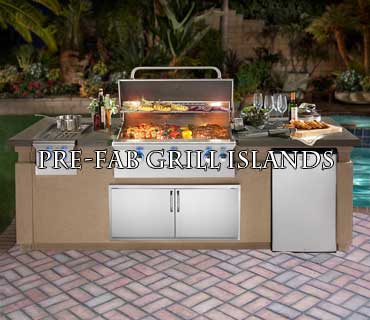
Prefab and modular islands are often the most practical path for small patios because they reduce construction complexity and keep the footprint predictable. If you want quick installation and a clean, built-in look, start here: Pre-Fab Grill Islands .
The trade-off is fixed cutouts. If you need a custom fit to a narrow wall or a unique patio shape, a custom island may be the better long-term solution.
Appliance and Component Picks That Save Space
In small kitchens, every component needs a reason to exist. These upgrades consistently add value without expanding the footprint:
- Access doors + drawer combos: tools stay inside the island, not on the counter.
- Compact outdoor refrigeration: fewer trips inside during parties.
- Side burner (only if used): helpful for sauces and boiling, but not essential for everyone.
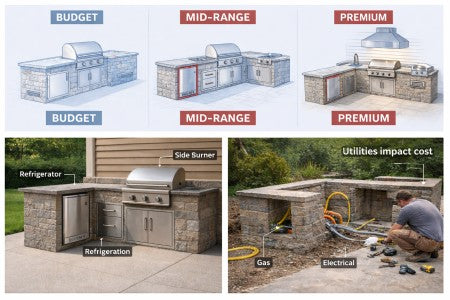
- Smart ventilation components: planned from day one for safe island performance.
Explore core build components here: Outdoor Kitchen Components.
Utilities, Ventilation, and Safety in Tight Layouts
Small layouts can be safer than large layouts when they are planned correctly. The risk comes from crowding: guests walking too close to hot surfaces, grills installed too tightly to walls, or ventilation ignored because “it’s outside.”
Follow manufacturer guidance on:
- Clearance to walls and combustible surfaces
- Island vent placement for enclosed cavities
- Vent hoods when grills are installed under a roof
Common Mistakes in Small Outdoor Kitchen Design
- Overbuilding the island and shrinking the entertainment zone
- Placing seating directly behind the grill lid swing
- Skipping storage, which forces clutter onto counters
- Buying appliances first and discovering they don’t fit the layout
- Ignoring ventilation and clearance requirements in tight installs
Example Small-Space Setups (3 Practical Builds)
Example 1: Narrow Patio Straight Run
- Built-in grill centered
- Short prep counter on one side
- Access door or door/drawer combo below
Example 2: Corner L-Shape for Entertaining
- Grill on long leg, serving counter on short leg
- Drawers for utensils and tools
- Optional compact refrigeration
Example 3: Pool Deck Galley Setup
- Grill run facing a separate serving run
- Clean traffic path behind guests
- Minimal appliances, maximum landing space
Key Takeaways
- Small outdoor kitchens succeed when workflow and guest traffic are planned first.
- Straight runs work best for narrow patios; compact L-shapes improve prep and serving flow.
- Galley layouts can work in tight entertaining zones when the walkway remains clear.
- Prefab and modular islands simplify installation and keep footprints predictable.
- Storage and a small prep counter near the grill matter more than extra appliances.
- Ventilation and clearances still apply, especially under covered patios.