

Budget, Mid-Range, and Premium Options Explained
The fastest way to overspend on an outdoor kitchen is to buy appliances first and figure out the layout, utilities, and island structure later. Cost is not just about the grill. It is about the entire system: the island, ventilation, utilities, storage, countertop, and the way the space will be used.
Backyard Patio Oasis supplies the grills, outdoor kitchen components, and island accessories people use across every budget level. This guide breaks outdoor kitchen costs into three realistic tiers and explains what changes as you move from “simple and functional” to “fully built-in and entertaining-ready.”

Quick Cost Overview
Outdoor kitchens can be built at multiple price points. A practical way to think about cost is by scope:
- Budget: A functional cooking station with limited built-in work, often using a simple island structure or modular base.
- Mid-range: A full built-in grill island with storage, counter space, and at least one major “comfort” or convenience upgrade.
- Premium: A complete outdoor kitchen environment with multiple appliances, high-end finishes, and serious entertaining flow.
The most important point: “budget” is not a bad outdoor kitchen. Many homeowners end up happiest with a well-planned mid-size layout that prioritizes workflow, safe ventilation, and durable components.
What Drives Outdoor Kitchen Costs the Most
If you want to predict costs accurately, focus on the factors that move the needle.
1. Island Structure (Prefab vs Custom)
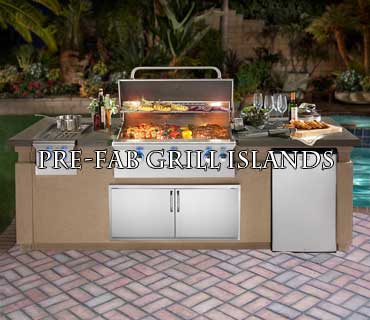
Prefabricated islands and modular cabinet systems generally reduce labor and shorten timelines. Custom islands allow any layout and finish, but the structure, cladding, and installation time can increase cost quickly.
If you are exploring prefab options, start with: Pre-Fab Grill Islands.
2. Appliance Count
One grill is straightforward. Adding a side burner, refrigeration, sink, pizza oven, or power burner changes the utility needs and often increases island length.
You can browse core appliance types here: Grills & Smokers and Outdoor Kitchen Components .
3. Countertop and Finish Materials
Countertop materials vary widely in durability, heat resistance, and long-term appearance. Premium finishes can be worth it, but only after the functional core is correct.
4. Utilities (Gas, Electric, Water)
Gas lines, electrical circuits for refrigeration and lighting, and optional water/drain lines are major cost variables. Distance from the house and trenching complexity can matter more than the appliance selection itself.
5. Ventilation and Safety Requirements
Island vents, safe clearances, and vent hoods (when under a covered structure) are not “nice to have.” They are planning requirements that protect equipment and reduce risk.

Budget Outdoor Kitchen: What to Expect
A budget outdoor kitchen focuses on a reliable cooking setup with minimal built-in complexity. The key is not to chase features. It is to design a layout that is easy to use and safe to operate.
Typical budget-tier scope
- A quality grill (built-in or freestanding)
- Basic counter or a simple space for prepping and plating.
- Minimal built-in storage (often one access door)
- Essential ventilation (if enclosed)
Budget builds often make sense when you already have a patio and want to add a cooking station without committing to a large footprint.
Mid-Range Outdoor Kitchen: What Changes
Mid-range outdoor kitchens are where most homeowners land because this tier is where the kitchen starts to feel complete. You are no longer improvising prep space or storage. The layout supports real outdoor cooking habits.
Typical mid-range scope
- Built-in grill in an island structure
- More counter space for prep and plating
- Storage drawers and access doors
- Optional outdoor refrigeration or a side burner
- Clear ventilation planning and component access
This is the tier where components like access doors, drawers, and storage combos make a visible difference in daily usability. Explore options here: Outdoor Kitchen Storage.

Premium Outdoor Kitchen: Where the Money Goes
Premium outdoor kitchens are less about “more expensive appliances” and more about building a full environment: multiple cooking methods, smooth entertaining flow, and finishes that hold up over time.
Typical premium scope
- Built-in grill + additional cooking appliance (side burner, power burner, pizza oven, etc.)
- Dedicated refrigeration and storage zones
- Higher-end counter and finish materials
- Lighting upgrades and comfort additions (heaters, fire features)
- Vent hood planning if under a roof or covered patio
Premium kitchens often integrate the entertaining space more intentionally. If your design includes heating or fire features, browse: Outdoor Fireplaces or Outdoor Patio Heaters .
Prefab vs Custom: How Build Type Impacts Cost
The island structure is often the biggest budget swing.
Prefab and modular systems
- Faster installation
- Predictable configuration and cutouts
- Often lower labor cost
- Best for straightforward straight-run or smaller L-shapes
Custom islands
- Unlimited layout and finish flexibility
- Better fit for large L-shapes, U-shapes, and integrated bar seating
- More variables in labor and material costs
- Requires careful ventilation and access planning
If you want to compare those approaches in detail, the companion article “Prefab vs Custom Outdoor Kitchen Islands” is the perfect next internal link on your blog.
Where to Spend (and Where to Hold Back)
Spend where it improves safety and daily usability
- Ventilation components and correct installation planning
- Durable storage access (doors and drawers)
- Counter space and landing area near the grill
- Outdoor-rated refrigeration (if you add it)
Hold back where it adds complexity without real use
- Multiple specialty appliances you rarely use
- Overbuilt islands that shrink the entertaining zone
- Finishes that require constant maintenance in your climate
Hidden Costs People Miss
- Utility upgrades: new circuits, dedicated outlets, or trenching
- Vent hood ducting: when under a roof
- Delivery logistics: freight access, lifting, and staging space
- Permits and inspections: depending on your area
- Weather protection: covers, shade, drainage planning

Example Builds by Budget Level
These examples are designed to help you visualize how each tier comes together. Exact cost depends on brand selection, island structure, and local installation variables.
Example 1: Budget Straight-Run Cooking Station
- Single grill (built-in or freestanding)
- Basic landing counter
- One access door for utility access
- Essential island ventilation if enclosed
Best for small patios and homeowners who want a simple outdoor setup that still feels intentional.
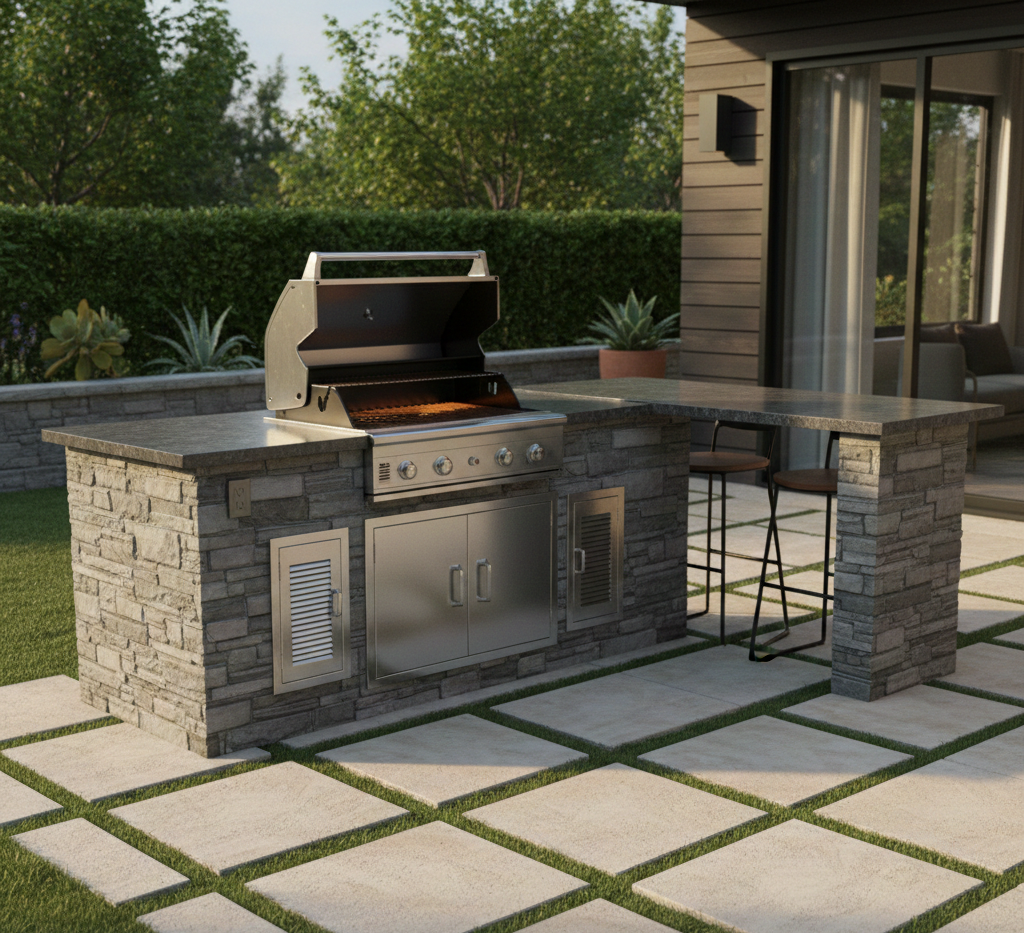
Example 2: Mid-Range L-Shaped Island
- Built-in grill
- Storage drawers and access doors
- Dedicated prep counter
- Optional outdoor refrigerator or side burner
This build supports a real entertaining area and reduces trips inside. It is a strong “sweet spot” for long-term value.
Example 3: Premium U-Shaped Entertaining Kitchen
- Built-in grill + secondary appliance (side burner, power burner, or pizza oven)
- Refrigeration and expanded storage
- Integrated serving and bar seating
- Lighting, comfort upgrades, and hood planning if covered
Best for frequent hosts who want a complete outdoor environment built around cooking and gathering.
Cost Planning Checklist
- Confirm your layout (straight, L, or U) before buying appliances.
- List your “must-have” appliances and your “nice-to-have” upgrades.
- Plan utilities early: gas, electric, and optional water.
- Confirm ventilation requirements for enclosed islands and covered patios.
- Build in storage access for future maintenance and service.
- Choose finishes that match your climate and maintenance tolerance.
Key Takeaways
- Outdoor kitchen cost is driven most by island structure, appliance count, finishes, and utilities.
- Budget kitchens can be highly functional when layout and safety are planned first.
- Mid-range kitchens deliver the best day-to-day usability for most homeowners.
- Premium kitchens pay for multiple appliances, upgraded finishes, and entertaining flow.
- Prefab islands reduce labor and improve predictability; custom builds maximize flexibility.
- Plan ventilation, utility access, and storage before committing to expensive upgrades.