




Gas, Electric, and Water Planning
Table of Contents
- Key Takeaways
- Why Utility Planning Matters for Outdoor Kitchens
- Gas Line Planning for Outdoor Kitchens
- Electrical Planning for Outdoor Kitchens
- Water Supply for Outdoor Kitchen Sinks
- Running Utility Lines to the Outdoor Kitchen
- Working With Licensed Professionals
- Planning Utilities Before Building the Island
- Final Thoughts
Building an outdoor kitchen involves more than choosing grills and storage. Behind every functional setup is a well-planned utility system that safely delivers gas, electricity, and water where they are needed.
Many outdoor kitchen problems trace back to utilities that were not planned early enough. Undersized gas lines, electrical outlets placed too far from appliances, or missing water shutoffs can make installation difficult and limit how the space works in daily use.
The good news is that planning utilities for an outdoor kitchen is fairly straightforward when you understand the basics. This guide explains how gas, electrical, and water systems typically work in backyard cooking spaces, along with the key decisions to make before construction begins.

Key Takeaways
- Gas lines must be properly sized to supply grills, side burners, and other gas appliances.
- Outdoor electrical circuits require GFCI protection and weather-resistant outlets.
- Water supply and drainage are required if you plan to install a sink or ice maker.
- Utility planning should happen before building the island structure.
- Local building codes often require licensed professionals for gas and electrical work.
Why Utility Planning Matters for Outdoor Kitchens
Outdoor kitchens rely on multiple systems working together. Grills may use natural gas or propane, refrigerators require electricity, and sinks need both a water supply and drainage.
Planning utilities early helps prevent several common problems:
- Appliance locations that cannot be supported by existing gas lines
- Electrical outlets placed too far from appliances
- Insufficient circuits for refrigeration or lighting
- Water supply without proper drainage
In practice, most outdoor kitchens are built around three utility systems:
- Gas for grills and burners
- Electricity for appliances and lighting
- Water supply and drainage for sinks or ice makers
Each system has its own installation requirements and safety considerations.
Gas Line Planning for Outdoor Kitchens
Gas is the primary fuel source for most outdoor cooking appliances. Built-in grills, side burners, power burners, and some fire features all rely on a gas supply.
Natural Gas vs Propane
Outdoor kitchens usually use one of two fuel types.
Natural gas
- Supplied by the home's gas service line
- Delivered through permanent underground piping
- No tanks required
- Continuous fuel supply
Propane
- Stored in tanks
- Often used when natural gas is unavailable
- Requires access for tank replacement
Built-in grills installed in outdoor islands commonly connect to natural gas lines, while freestanding grills often use propane tanks.
For grill comparisons and product options, see our Built-In Grills collection.
Gas Line Sizing
Gas piping must be sized correctly to deliver enough fuel to every appliance.
Several factors affect sizing:
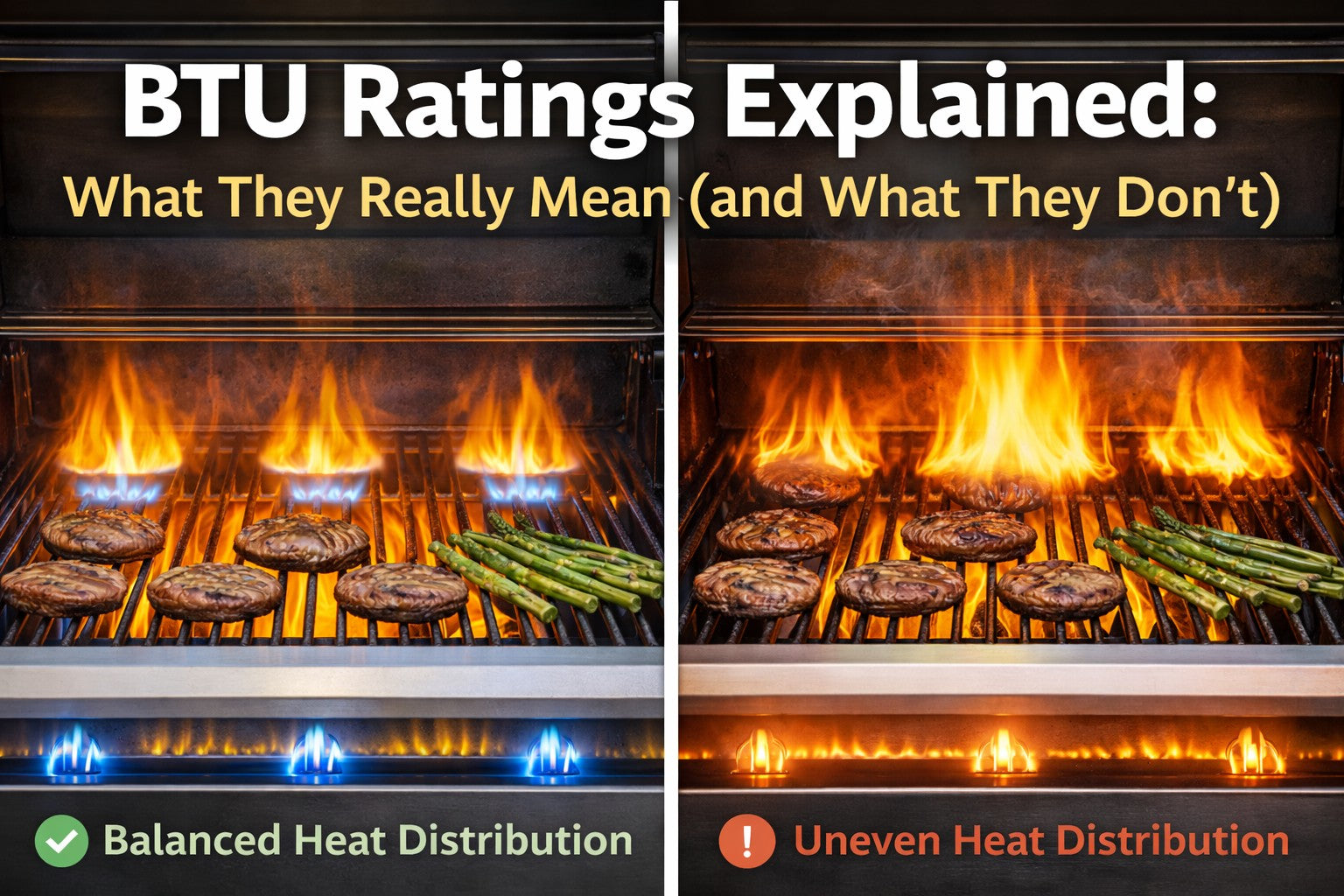
- Total BTU demand of appliances
- Distance from the gas meter
- Pipe diameter
- Number of appliances connected
For example, a typical outdoor kitchen may include:
- Built-in grill
- Side burner
- Power burner
- Fire feature
When these operate at the same time, the gas line must support the combined fuel demand.
Undersized lines can lead to weak flames, slow heating, or appliances that fail to ignite properly.
A licensed plumber or gas technician usually calculates proper pipe sizing based on appliance specifications.
Gas Shutoff Valves
Outdoor kitchens should include accessible shutoff valves.
These allow gas flow to be stopped during:
- Appliance service
- Leak inspections
- Seasonal shutdown
In most installations, a shutoff valve is installed where the gas line exits the house before running underground to the outdoor kitchen.
Flexible Gas Connections
Built-in appliances typically connect to the main gas line using flexible stainless steel connectors.
These connections allow minor movement during installation and make appliance servicing easier.
However, flexible connectors must be rated for outdoor use and installed according to the manufacturer's specifications.

Electrical Planning for Outdoor Kitchens
Electricity supports a wide range of outdoor kitchen features.
Common electrical appliances include:
- Outdoor refrigerators
- Ice makers
- Lighting systems
- Rotisserie motors
- Ignition systems for grills
Planning electrical service ensures every appliance has safe and convenient power access.
Outdoor Electrical Outlet Requirements
Outdoor kitchens require weather-resistant electrical outlets designed for exterior environments.
Two important features are typically required:
GFCI protection
Ground Fault Circuit Interrupter outlets automatically shut off power if an electrical imbalance is detected. This helps prevent electrical shock.
Weather-resistant covers
Outdoor outlets must be protected from moisture and rain.
Many local codes require at least one outdoor outlet near cooking areas.
Dedicated Circuits for Refrigeration
Outdoor refrigerators and ice makers often require dedicated electrical circuits.
This prevents electrical overload and helps maintain consistent appliance performance.
For refrigeration options, browse our Outdoor Refrigerators collection.
Electrical load calculations help determine whether the existing outdoor electrical service can support new appliances.
Electrical Planning for Lighting
Lighting plays a major role in how outdoor kitchens function after sunset.
Common lighting types include:
- Task lighting above grills and prep areas
- Ambient lighting for seating spaces
- Under-counter lighting
- Safety lighting along walkways
Lighting circuits are often installed during the same phase as appliance electrical work to minimize additional trenching.
Water Supply for Outdoor Kitchen Sinks
Many outdoor kitchens include sinks to simplify food preparation and cleanup.
Adding a sink requires both water supply and drainage planning.
Water supply lines typically branch from the home's existing plumbing system.
Common supply options include:
- Cold water only
- Hot and cold water lines
- Frost-resistant outdoor plumbing
Cold-water-only setups are common in seasonal outdoor kitchens, while full hot and cold plumbing is more common in permanent installations.
If you are adding a sink station, explore our Outdoor Kitchen Sinks and Outdoor Kitchen Faucets.
Drainage Options
Drainage planning depends on local plumbing regulations.
Common solutions include:
- Connection to household drain system - The most complete option. Wastewater flows directly into the home's plumbing system.
- Dry well drainage - Water drains into a gravel pit below ground.
- Gray water drainage systems - Some regions allow controlled drainage for sink water used during food preparation.
Local plumbing codes often determine which options are permitted.
Freeze Protection
In colder climates, outdoor plumbing requires protection during winter.
Common methods include:
- Shutoff valves inside the home
- Drain valves for seasonal winterization
- Insulated piping
- Frost-proof hose bib connections
These precautions help prevent frozen pipes and plumbing damage during the winter months.
For related seasonal planning, read our guide on Outdoor Kitchen Checklist: Appliances, Components, Utilities, and Safety.

Running Utility Lines to the Outdoor Kitchen
Utilities typically reach the outdoor kitchen through underground trenches.
Lines that may be buried include:
- Gas piping
- Electrical conduit
- Water supply lines
- Drain piping
Trenching depth requirements vary depending on local building codes and climate.
In many installations, utilities run beneath the patio surface before entering the island structure.
Planning the exact appliance layout before trenching helps ensure utilities reach the correct locations.
Working With Licensed Professionals
Gas and electrical systems involve safety risks if installed incorrectly.
Most municipalities require licensed contractors for:
- Gas line installation
- Electrical wiring
- Plumbing connections
Professionals ensure installations meet building codes and pass inspections.
Even if the outdoor kitchen island is built by the homeowner, utilities are often installed by licensed trades.
Planning Utilities Before Building the Island
One of the most common mistakes in outdoor kitchen construction is building the island before utilities are installed.
Utility lines should be planned and installed before the final island structure is completed.
This allows proper routing for:
- Gas connections
- Electrical conduit
- Water supply
- Drainage pipes
Once utilities are in place, appliance openings, vents, and access panels can be aligned correctly.
For broader layout planning, see Outdoor Kitchen Planning 101: How to Design a Functional Backyard Cooking Space and Outdoor Kitchen Layouts: L-Shaped, U-Shaped, Straight Runs Explained.
Final Thoughts
A well-designed outdoor kitchen depends more on solid planning than on the appliance list alone. Gas supply, electrical service, and water access all shape how smoothly the space works during everyday cooking and entertaining.
When utilities are planned early, installation becomes easier and appliances perform the way they should. Grills ignite properly, refrigeration runs reliably, and sinks add practical cleanup space where it actually helps.
For homeowners building their own outdoor kitchen, mapping these systems early is one of the most useful steps in the process. It helps you avoid expensive changes later and gives each appliance the support it needs from the start.