



When planning an outdoor kitchen, one of the first decisions is whether to choose a prefabricated grill island or build a fully custom island. Prefab islands are usually faster to install and easier to budget, while custom islands give you more control over layout, appliance placement, finishes, and utility routing.
Both options can support built-in grills, side burners, refrigeration, storage, sinks, and other outdoor kitchen components. The better choice depends on your available space, budget, appliance requirements, and how much flexibility you want during the design process. Backyard Patio Oasis specializes in providing the appliances, components, and accessories needed for either path.

What Is a Prefabricated Outdoor Kitchen Island?
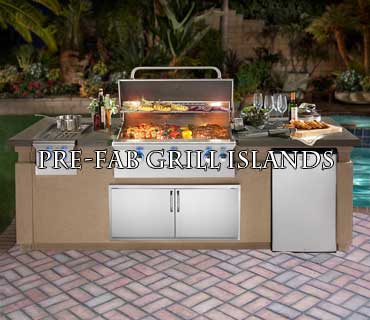
A prefabricated (prefab) grill island is a factory-built structure designed to accept specific appliances. These units arrive with predetermined cutouts for built-in grills, doors, drawers, sinks, side burners, refrigeration, and other features.
At Backyard Patio Oasis, popular prefab product lines include:
Advantages of Prefab Islands
- Faster installation: Many prefab islands can be set, leveled, and connected in a single day.
- Predictable cost: Pricing is clear upfront because the structure, frame, and finish are factory-built.
- Engineered compatibility: Appliances and storage components are designed to fit the preset openings, reducing measurement errors.
- Durable materials: Brands often use powder-coated steel frames, porcelain panels, or outdoor-rated composite materials.
Limitations of Prefab Islands
- Fixed configuration: The island size, shape, and cutouts cannot be adjusted.
- Restricted appliance choices: You must use compatible grill heads, access doors, and components.
- Less personalization: Finish materials and countertop options are limited.

What Is a Custom Outdoor Kitchen Island?
A custom outdoor kitchen island is built on-site using materials such as steel framing, cinder block, concrete board, natural stone, stucco, porcelain tile, or poured concrete. A contractor or experienced builder fabricates the structure to exact dimensions.
Advantages of Custom Islands
- Exact fit: Perfect for challenging spaces, tight corners, or unique patio dimensions.
- Total appliance flexibility: Build the island around the outdoor kitchen components you want instead of fitting appliances into predetermined openings.
- Unlimited finishes: Match existing masonry, blend with a pool deck, or use higher-end surfaces.
- Integrated utilities, plumbing, gas, electrical, and drainage can be placed exactly where needed.
Limitations of Custom Islands
- Longer build time: Construction can take days or weeks, depending on complexity.
- Variable cost: Material and labor prices fluctuate significantly by region.
- Requires skilled labor: Poor workmanship can compromise ventilation or create unsafe clearance issues.

Performance Differences: What Actually Matters
Both prefab and custom islands can support the same high-performance equipment. The key differences show up in installation tolerances, long-term maintenance, and component integration with the structure.
1. Appliance Compatibility
Prefab islands require appliances that match the factory-cut dimensions. Custom island builders can frame openings to any specification. This is relevant when choosing:
- Built-in grill heads
- Side burners and power burners
- Refrigeration units
- Trash drawers
- Access doors and storage drawers
You can see compatible storage and access components in our Outdoor Kitchen Storage collection.
2. Ventilation Requirements
Ventilation must never be overlooked. Custom islands require the installer to correctly place:
- Gas ventilation panels
- Heat-dissipation vents
- Proper hood placement is under a roof
Prefab islands, by contrast, have ventilation engineered into the frame — reducing the risk of improper placement.

3. Utility Routing
Custom builds allow exact placement of:
- Gas lines
- Electrical outlets
- Sink plumbing
- Drainage and shutoff points
Prefab islands typically have set utility paths. This simplifies installation but offers less flexibility.
4. Long-Term Serviceability
A well-built custom island offers excellent longevity but may require a contractor for major repairs. Prefab islands make it easier to replace appliances in the future because cutouts follow standardized dimensions.
Cost Comparison
While prices vary by region and materials, general guidelines are:
Prefab Islands
- Lower entry cost due to factory assembly
- Predictable pricing with fewer hidden variables
- Minimal installation labor
Custom Islands
- Higher overall cost due to masonry, framing, and finishing
- More customization means more variables that impact price

Which Option Is Right for You?
Here’s a quick decision guide:
You Should Choose a Prefab Island If You Want:
- Faster installation
- Lower upfront cost
- Standard sizes and predictable layouts
- Factory-engineered fits for grills, storage, and appliances
You Should Choose a Custom Island If You Need:
- A layout that fits a challenging or unique space
- Exact appliance selection with no limitations
- High-end finishes that match masonry or existing architecture
- Fully tailored bar seating, counters, or workflow design
Key Takeaways
- Prefab islands offer speed, predictable pricing, and simplified installation — ideal for most standard backyards.
- Custom islands provide unlimited customization, appliance flexibility, and premium finishes.
- Proper ventilation, appliance compatibility, and utility placement matter more than the island type.
- Backyard Patio Oasis supplies the grills, components, and accessories required for both prefab and custom builds.
- Always follow manufacturer specifications and local building codes when installing grills and island components.